GPT-4 Enabled Invoice Processing
Project Overview
At Sangam Supermarket and Wholesale, I noticed that management
faced challenges sorting through unstructured invoices and
inputting them into the inventory system. Processing 3-6 invoices
daily manually consumed valuable time that could be better spent
on other critical tasks.
To address this, I took the initiative to develop a solution using
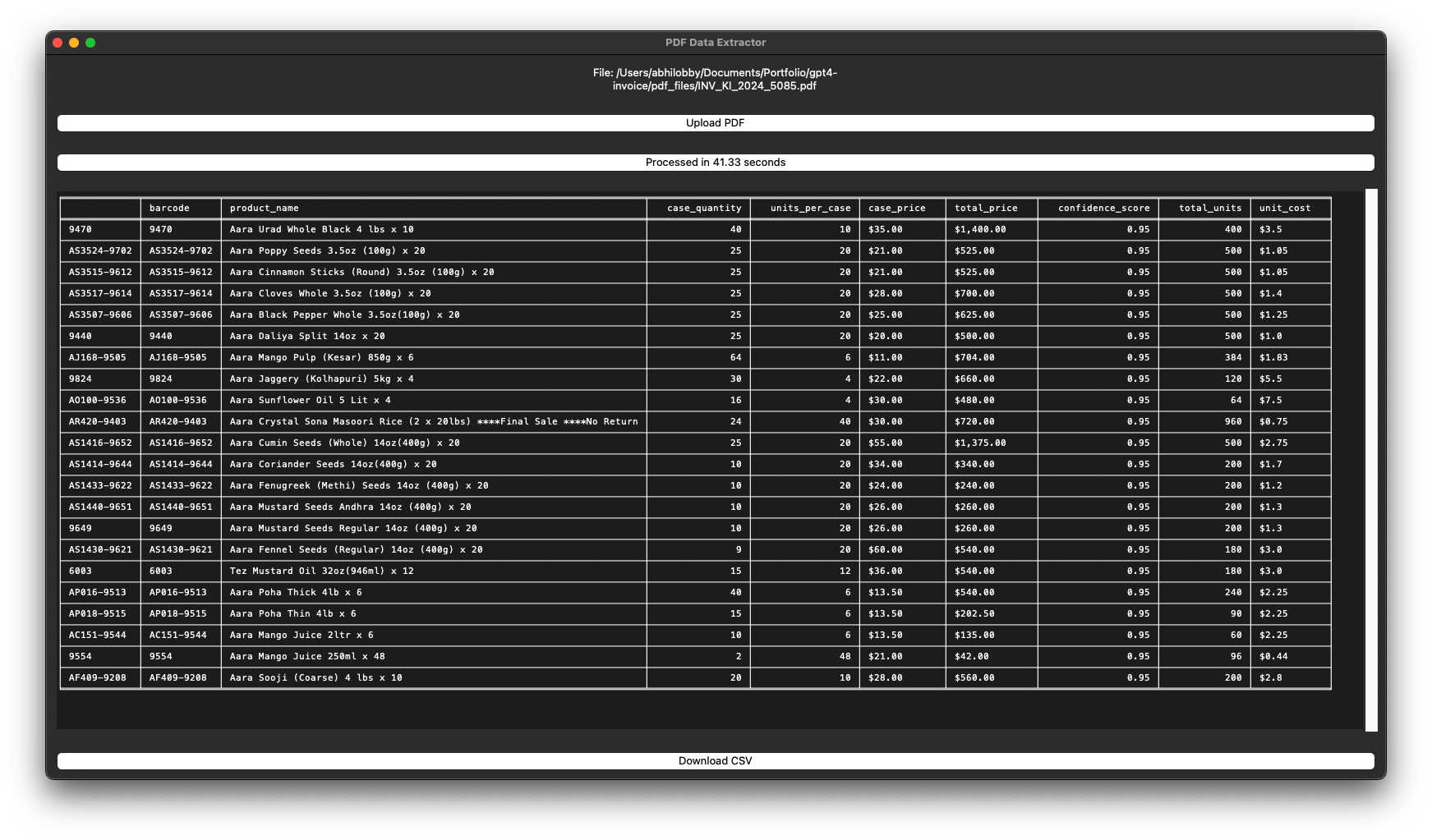
GPT-4o-mini, Python, SQL, and Excel. This system streamlined the
extraction of key information from invoices, enabling faster
processing and significantly reducing the time required for data
entry.
Problem Statement
At Sangam Supermarket and Wholesale, the management team struggled with the time-intensive process of handling unstructured FMCG invoices. These invoices, often lacking standard formats, required manual calculations and data entry into the inventory system. Processing 3-6 invoices daily diverted valuable time and resources from critical business operations, creating inefficiencies and delaying decision-making.
Solution Approach
To streamline the invoice processing challenges at Sangam Supermarket and Wholesale, I collaborated closely with the manager responsible for handling invoices to develop a tailored solution that leveraged modern tools while maintaining familiar workflows.
Development Process:
- Requirements Analysis: Conducted detailed consultation with the manager to understand pain points and workflow preferences, particularly their familiarity with Excel and CSV formats.
- Automated Data Extraction: Developed Python scripts utilizing OpenAI's API to extract key information from unstructured invoices, including unit costs, quantities, and other relevant details.
- Data Integration System: Created a comparison system that pulls current inventory data as CSV and validates it against extracted invoice information, highlighting discrepancies.
- User-Centric Design: Implemented CSV-based workflows that aligned with the manager's technical expertise, ensuring minimal training requirements and seamless adoption.
- Iterative Refinement: Maintained continuous feedback loops with the manager, incorporating suggestions to improve usability and workflow integration.
Key Design Principles:
- Prioritize automation while maintaining user control
- Align with existing workflow preferences
- Ensure minimal technical expertise requirements
- Enable easy validation and error checking
Results & Impact
- Time Efficiency: Achieved up to 80% reduction in invoice processing time, with management team saving an average of 58% time per invoice.
- Improved Accuracy: Streamlined workflow significantly reduced data entry errors and enhanced overall inventory record accuracy.
- Resource Optimization: Management team was able to redirect saved time towards strategic tasks and planning.
- Cultural Impact: Increased confidence in automation tools among the management team, paving the way for future digital transformation initiatives.
Key Learnings
- The Importance of User-Centered Design: Collaborating closely with end users highlighted the value of tailoring solutions to meet specific needs, ensuring successful adoption and usability.
- Bridging Technical and Practical Solutions: Combining advanced tools like Python and OpenAI's API with accessible formats like CSV demonstrated how to make sophisticated technology more approachable for non-technical users.
- Iterative Problem-Solving: Continuous feedback loops during development reinforced the importance of adaptability and iterative refinement to create a robust and user-friendly solution.